
Concept project walkthrough
Nightjar: shaping a coffee-house website around the visit
Nightjar is a fictional coffee house used to explore how atmosphere and useful information can coexist on a hospitality website. This is a design and interaction demonstration, not a commissioned client case study.
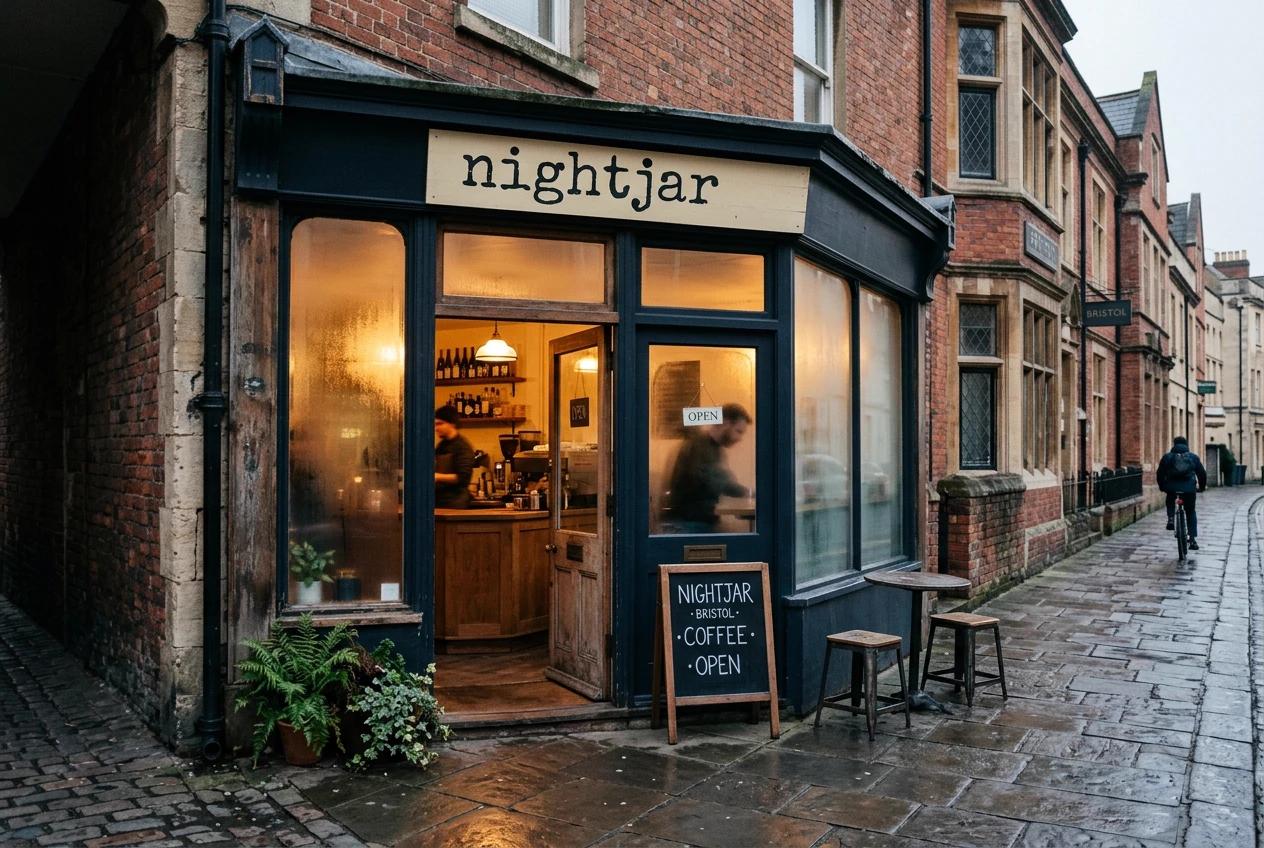
The illustrative brief
The starting question was how an independent coffee house could express its character while helping someone decide what to drink and how to visit. The audience includes a first-time guest browsing on a phone and a returning customer looking for a familiar product or practical detail.
The concept gives the coffee and the space an editorial identity. That identity is a design exercise: the fictional roastery story, product descriptions and location details should not be read as claims about an operating business.
Make browsing feel connected
Coffee cards, a menu interaction and a cold-brew section offer different ways into the range. Headings and navigation give those expressive sections a structure, so the page is more than a sequence of photographs.
The reading journey moves between product information and the story behind the coffee. In a commissioned project, the categories and descriptions would come from the actual menu and the owner’s priorities. The design should make those details easier to understand rather than inventing complexity for the visual effect.
Keep the practical route visible
The concept includes a visit section and demonstration interactions. A real hospitality build would agree the current address, hours, booking provider and customer support route before launch. Those operational decisions matter as much as the appearance of an action button.
Try the demo on a phone, open its menu and use its section links. The purpose is to inspect the journey and the behaviour. An illustrative order interaction does not take a real payment or prove a working fulfilment process.
Where a real project would go next
Discovery would establish the existing website, menu update process and booking or ordering services. From there, the scope could be a focused café website or a multi-page restaurant experience, with integrations agreed individually.
The launch checklist would cover accurate content, mobile and keyboard use, loading performance, error states and the end-to-end customer route. Ownership of content updates would be part of handover.
What this concept demonstrates
Nightjar demonstrates a possible visual direction, content hierarchy and interactive browsing experience. There are no measured client conversion, revenue or booking results associated with it. The value of the walkthrough is that you can inspect the decisions and decide which are relevant to your own business.
If you run a café or restaurant, bring your menu, practical details and current tools to a conversation. Babui can recommend the smallest useful scope and explain which parts would need production integration.